All Notes

Resume
2026 · profile
Feyi Agbaje Resume
About Feyi Agbaje
2026 · profile
Systems Design Engineer & IESE MBA. 9+ years across enterprise software, AI research, and operations.
Versa
2026 · flagship
Versa is a live daily word game from Dear Barry Games. I built the content quality system for generation, model evaluation, human review, curation, and product analytics.
Inside the Frontier
2025-26 · flagship
I turned a primary-source AI corpus into a grounded Atlas for comparing how frontier labs train, evaluate, and govern model releases without separating the claim from the evidence.
Daybreak
2026 · flagship
I took a GLP-1 companion from a weak generic tracker to a focused product thesis, then carried the strategy through product requirements, privacy boundaries, interaction design, and a deployed build.
Design Studio
2026 · flagship
I built a design-system studio to stop AI coding agents from inventing a new visual language every time they touch a product. It turns visual decisions into reusable tokens, semantic roles, and agent-readable constraints.
Maya Codex
2022 · enterprise
I led a joint research program asking where language models could genuinely help 3D artists learn Maya, where they would fail, and how those failures should change product strategy.
Bifrost Platform Foundations
2018–21 · enterprise
I helped turn an emerging procedural graph system into a product people could find, navigate, reuse, and adopt without breaking established Maya workflows.
Research Operations
2021–23 · enterprise
I turned a research bottleneck into reusable infrastructure: faster recruitment, a shared knowledge system, guarded self-service, analytics, and operational automation for a complex enterprise product organization.
Cached Playback
2018–19 · enterprise
I redesigned a technical caching feature around the way animators actually work, improving discoverability, learnability, control, and recovery while reducing a costly review loop.
Email Feyi 2026

Daybreak

I took a GLP-1 companion from a weak generic tracker to a focused product thesis, then carried the strategy through product requirements, privacy boundaries, interaction design, and a deployed build.
flagship0→1 product strategy
Open live product
Role
Solo product lead + builder
Market thesis through deployed prototype
Focus
0→1 product strategy
Opportunity selection · privacy · product boundaries
Skills
Market analysis · Product strategy
Risk framing · interaction design · execution
Tools
Gemini Deep Research · Manus · Claude
Mobbin MCP · OhMyPi agents · Cloudflare Pages
00 / Problem

The first product had features but no strong reason to exist.

I started with a familiar health-tracking concept. It could log information, but that did not create a meaningful advantage over established platforms.

Instead of adding features, I went back to the market and reframed the project around a narrower question: what does a GLP-1 companion need to do that generic tracking products do not?

Decision
Stop building the broad tracker. Use market evidence to define a more focused product thesis.
01 / Research

Turn market evidence into product boundaries.

I mapped trackers, behavioral programs, telehealth products, and GLP-1-specific tools. I reviewed more than 60 reference screens and translated the work into personas, product requirements, a business model, and a regulatory plan.

The research surfaced gaps around nutrition, treatment routines, progress context, and continuity with healthcare conversations.

60+
reference screens reviewed
4
priority market gaps
1
focused MVP thesis
02 / Strategy

Make privacy and product boundaries part of the design.

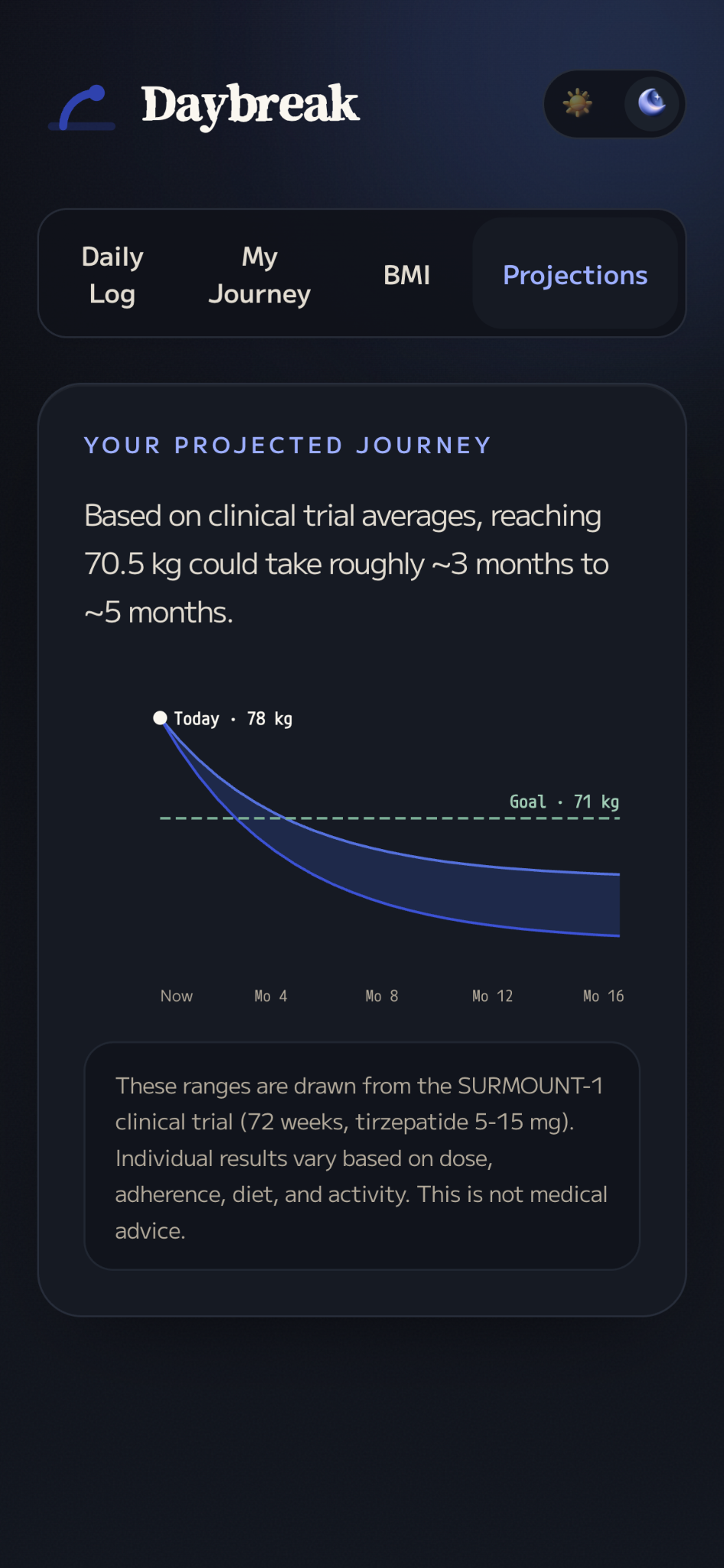
For the MVP, I chose a smaller wedge: help users record key parts of a GLP-1 journey, see progress over time, and understand basic context around the information they enter.

Daybreak is an informational companion. It does not diagnose, prescribe, or recommend treatment. The first version keeps data on-device rather than adding accounts and cloud storage before product value is validated.

01
Record
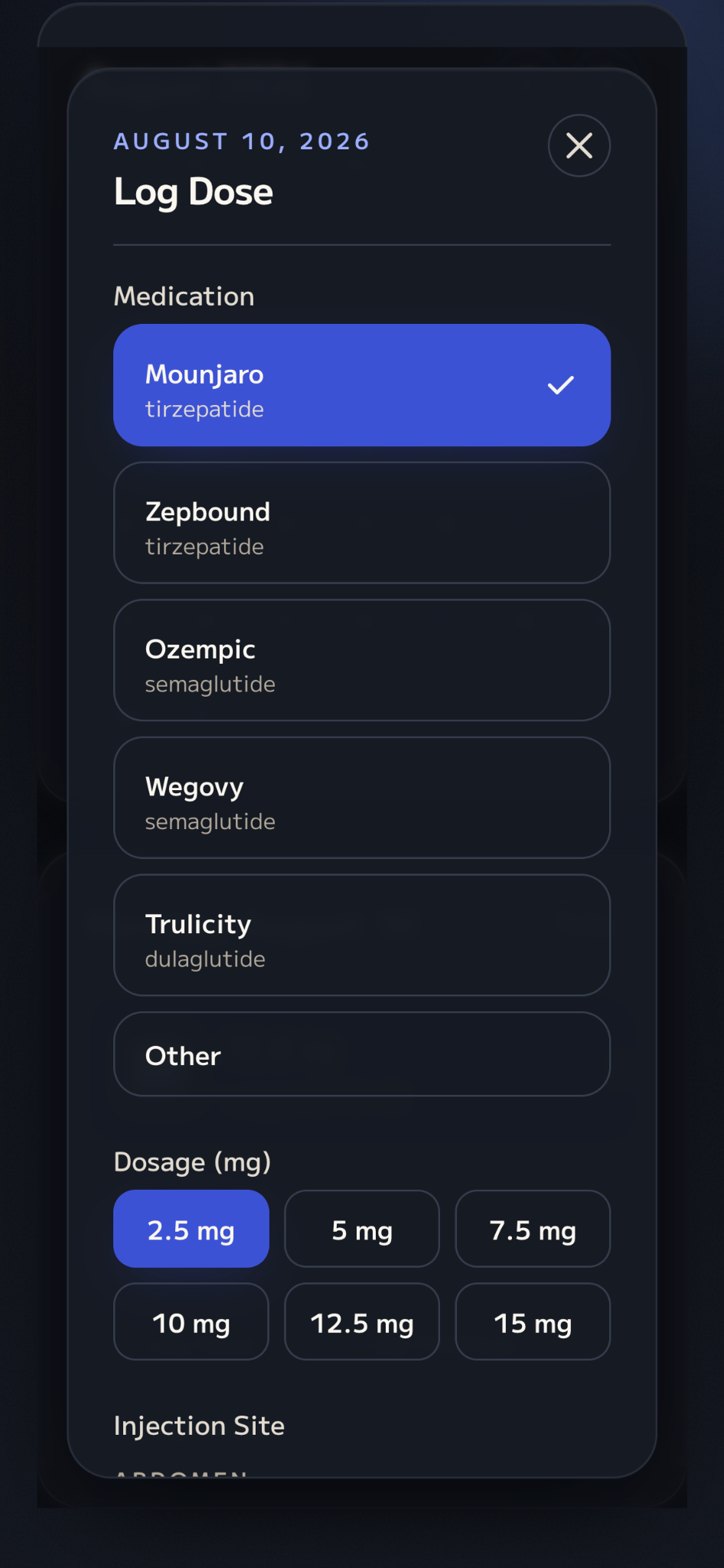
Capture user-entered events without prescribing.
02
Context
Explain limits instead of presenting medical certainty.
03
Ranges
Use ranges and source context instead of precise promises.
04
Local first
Keep the MVP on-device while testing product value.
03 / Product

Carry the thesis into a working product.

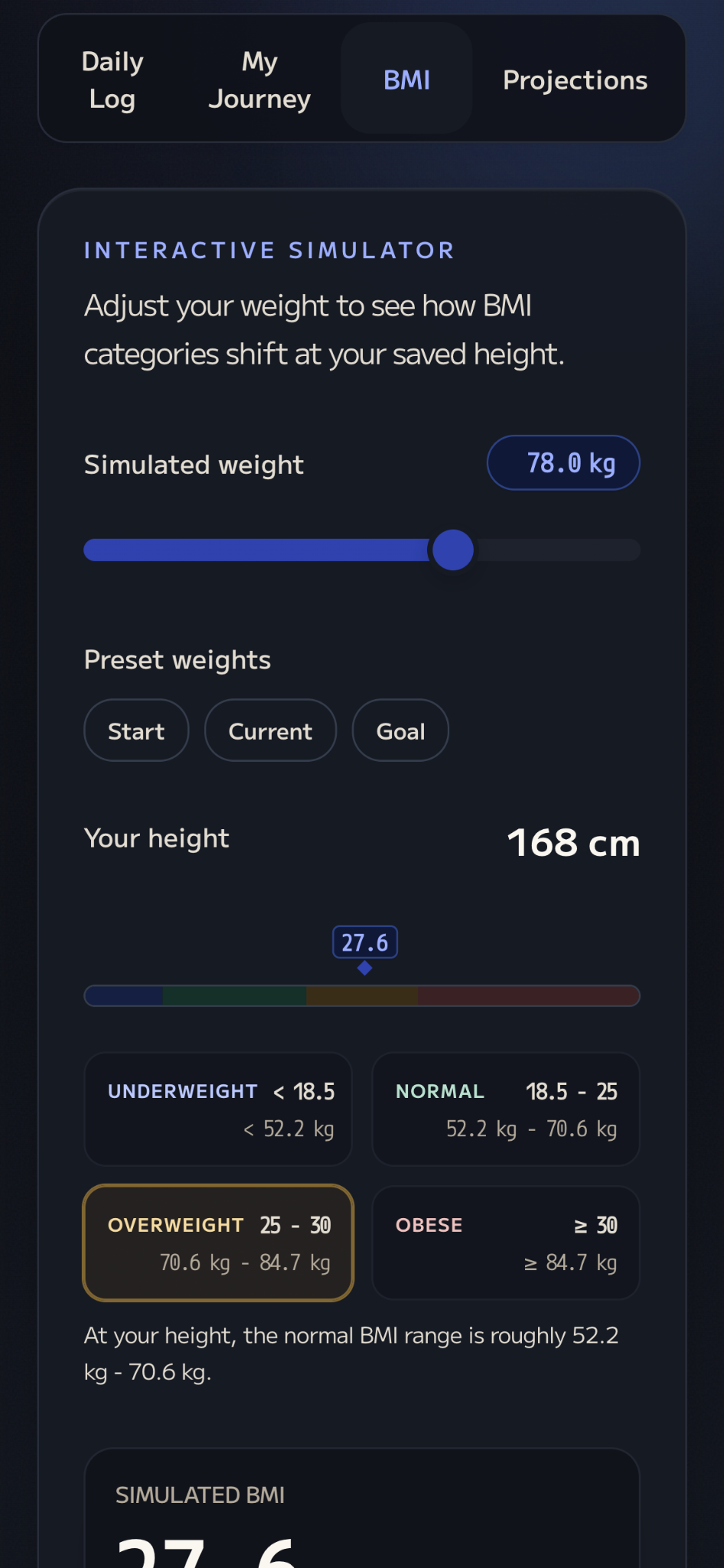
The product connects daily logging, treatment history, progress, body-mass context, and projections. The strategy defines what the interface will and will not claim.
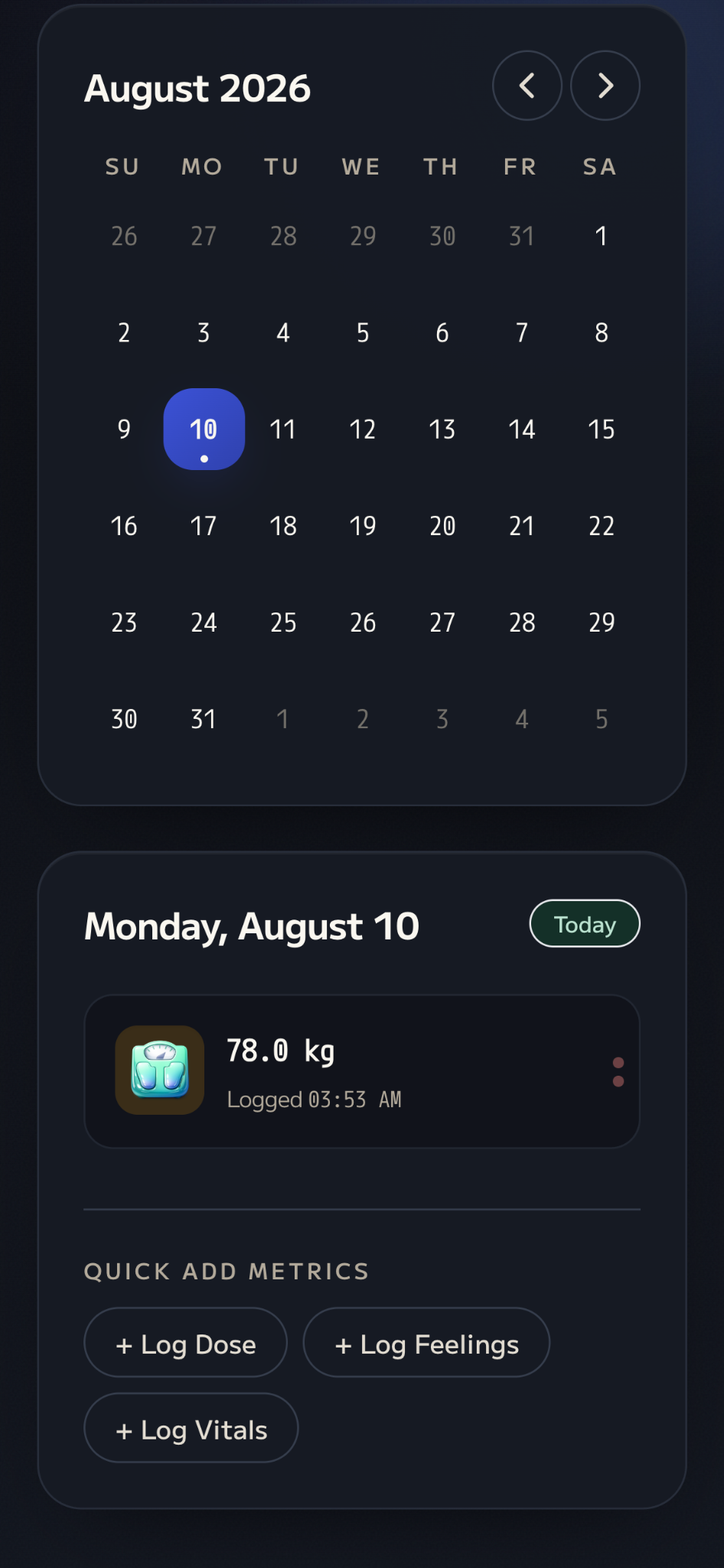
Daybreak product workflow iPhone 14 Pro
Daybreak daily log
Daily log:
Calendar-based history keeps daily events easy to find.
1 / 4
04 / AI-first build

Use different AI tools for different stages of the product cycle.

Market intelligence, PM artifacts, design research, and implementation were accelerated with different AI tools while product decisions stayed human-owned.

The workflow was instrumented: roughly 25 million tokens and 3,146 API requests cost $90.62 to reach the polished baseline.

$90.62
instrumented AI build cost
~25M
tokens across the workflow
3,146
API requests
05 / Result

The real output was a sharper product thesis.

Daybreak moved from a generic tracker to a deployed product with clearer boundaries. The work connects market analysis, product strategy, privacy decisions, health-risk framing, interaction design, and implementation.

The next stage is validation with target users, not more feature volume.

Market strategy
Moved from feature accumulation to opportunity selection.
Product judgment
Set clear privacy and health-product boundaries.
0→1 execution
Carried the thesis into a deployed prototype.
AI-first workflow
Used an orchestrated tool stack with explicit cost and decision ownership.

Working on a hard product problem?

I’m exploring GTM Strategy, AI Product, Product Strategy, and Forward Deployed roles.