All Notes

Resume
2026 · profile
Feyi Agbaje Resume
About Feyi Agbaje
2026 · profile
Systems Design Engineer & IESE MBA. 9+ years across enterprise software, AI research, and operations.
Versa
2026 · flagship
Versa is a live daily word game from Dear Barry Games. I built the content quality system for generation, model evaluation, human review, curation, and product analytics.
Inside the Frontier
2025-26 · flagship
I turned a primary-source AI corpus into a grounded Atlas for comparing how frontier labs train, evaluate, and govern model releases without separating the claim from the evidence.
Daybreak
2026 · flagship
I took a GLP-1 companion from a weak generic tracker to a focused product thesis, then carried the strategy through product requirements, privacy boundaries, interaction design, and a deployed build.
Design Studio
2026 · flagship
I built a design-system studio to stop AI coding agents from inventing a new visual language every time they touch a product. It turns visual decisions into reusable tokens, semantic roles, and agent-readable constraints.
Maya Codex
2022 · enterprise
I led a joint research program asking where language models could genuinely help 3D artists learn Maya, where they would fail, and how those failures should change product strategy.
Bifrost Platform Foundations
2018–21 · enterprise
I helped turn an emerging procedural graph system into a product people could find, navigate, reuse, and adopt without breaking established Maya workflows.
Research Operations
2021–23 · enterprise
I turned a research bottleneck into reusable infrastructure: faster recruitment, a shared knowledge system, guarded self-service, analytics, and operational automation for a complex enterprise product organization.
Cached Playback
2018–19 · enterprise
I redesigned a technical caching feature around the way animators actually work, improving discoverability, learnability, control, and recovery while reducing a costly review loop.
Email Feyi 2026

Design Studio

I built a design-system studio to stop AI coding agents from inventing a new visual language every time they touch a product. It turns visual decisions into reusable tokens, semantic roles, and agent-readable constraints.
flagshipAI-assisted design systems
Open live product
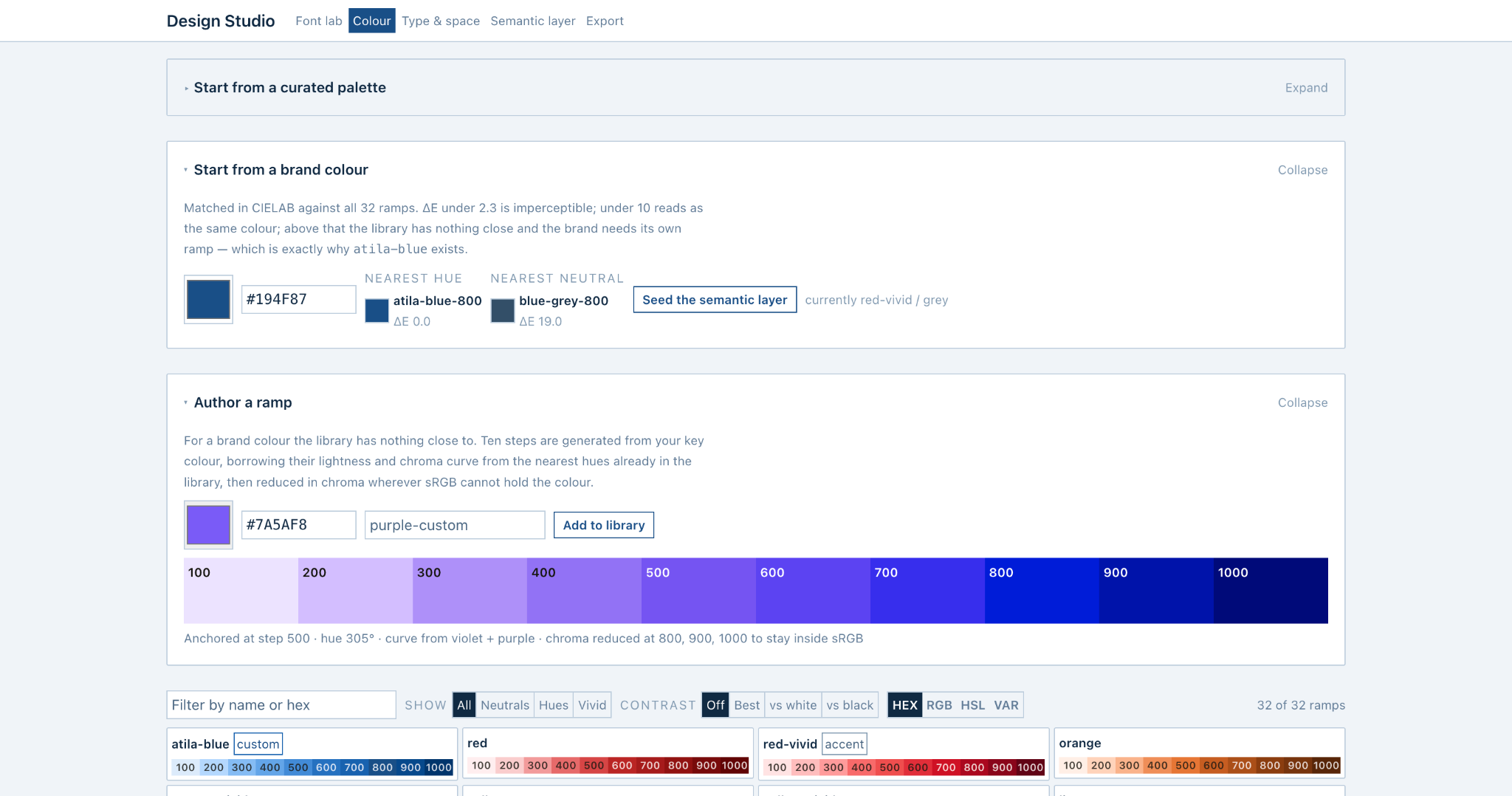
Design Studio colour workspace and generated ramp
Working productThe studio makes visual constraints inspectable and portable instead of relying on an agent to infer them from screenshots.
Role
Product designer + builder
Problem framing · system design · implementation
Focus
AI-assisted design systems
Human judgment → explicit constraints → agent handoff
Skills
AI tooling · Design systems
Developer experience · accessibility · product design
Tools
Google Design MCP · React · tokens
Agent briefs · SKILL.md · contrast validation
00 / Problem

AI made interface production faster and design drift easier.

I kept seeing the same failure in AI-assisted product work: an agent would invent a new font size, spacing value, colour, border, or surface treatment because the rules were not explicit enough.

I did not need another component library. I needed a way to make design judgment explicit before an agent wrote the UI.

Decision
Build one studio that explores the system, validates it, and exports the same rules to code and AI agents.
01 / System

One state, several design-system workspaces.

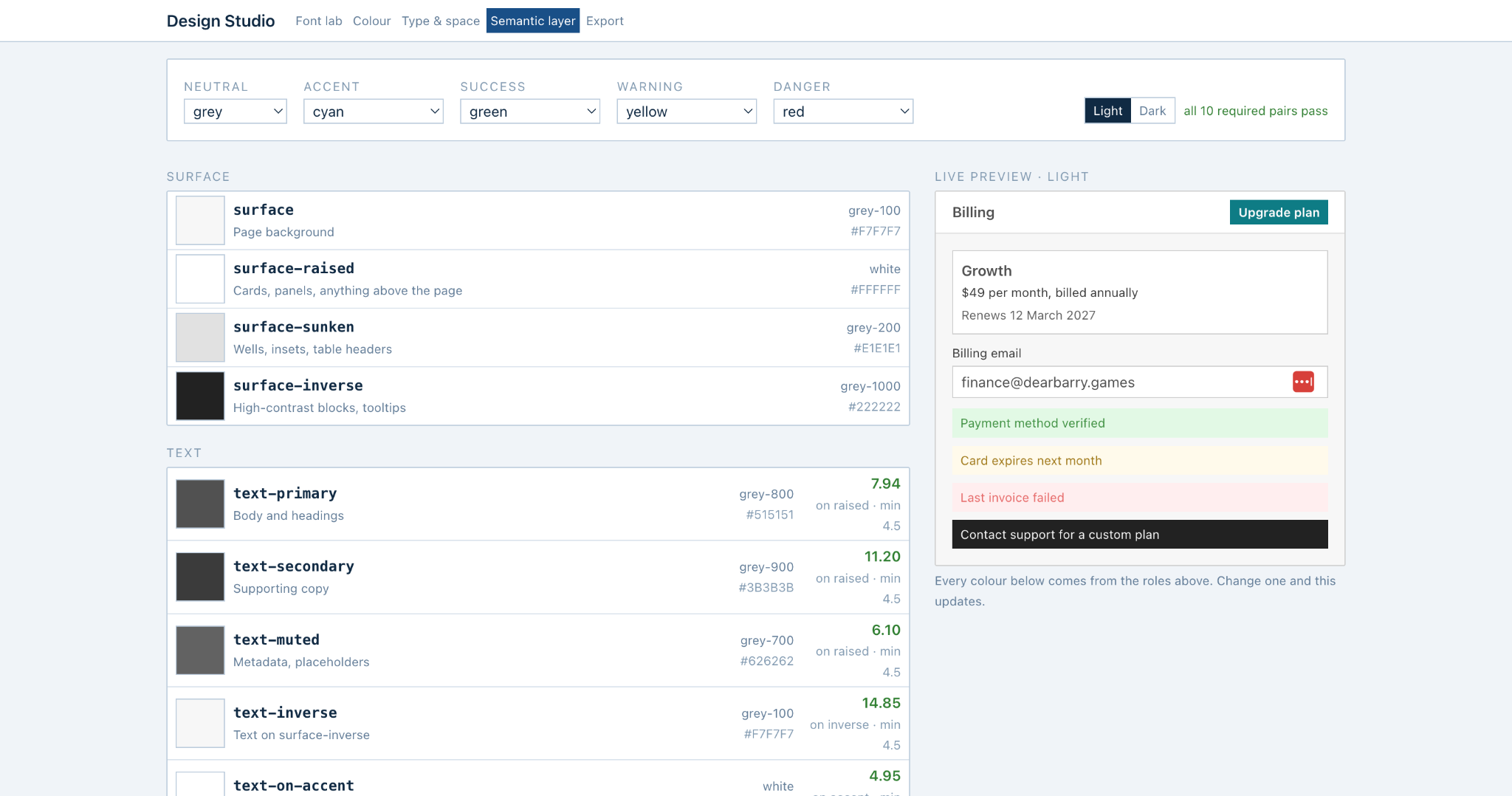
Design Studio started as a Claude Code artifact and became a standalone product because I kept using it. Font, colour, type, spacing, semantic roles, and export share one design-system state.

The agent should inherit the same constraints the human used to make the visual decisions.

01
Font Lab
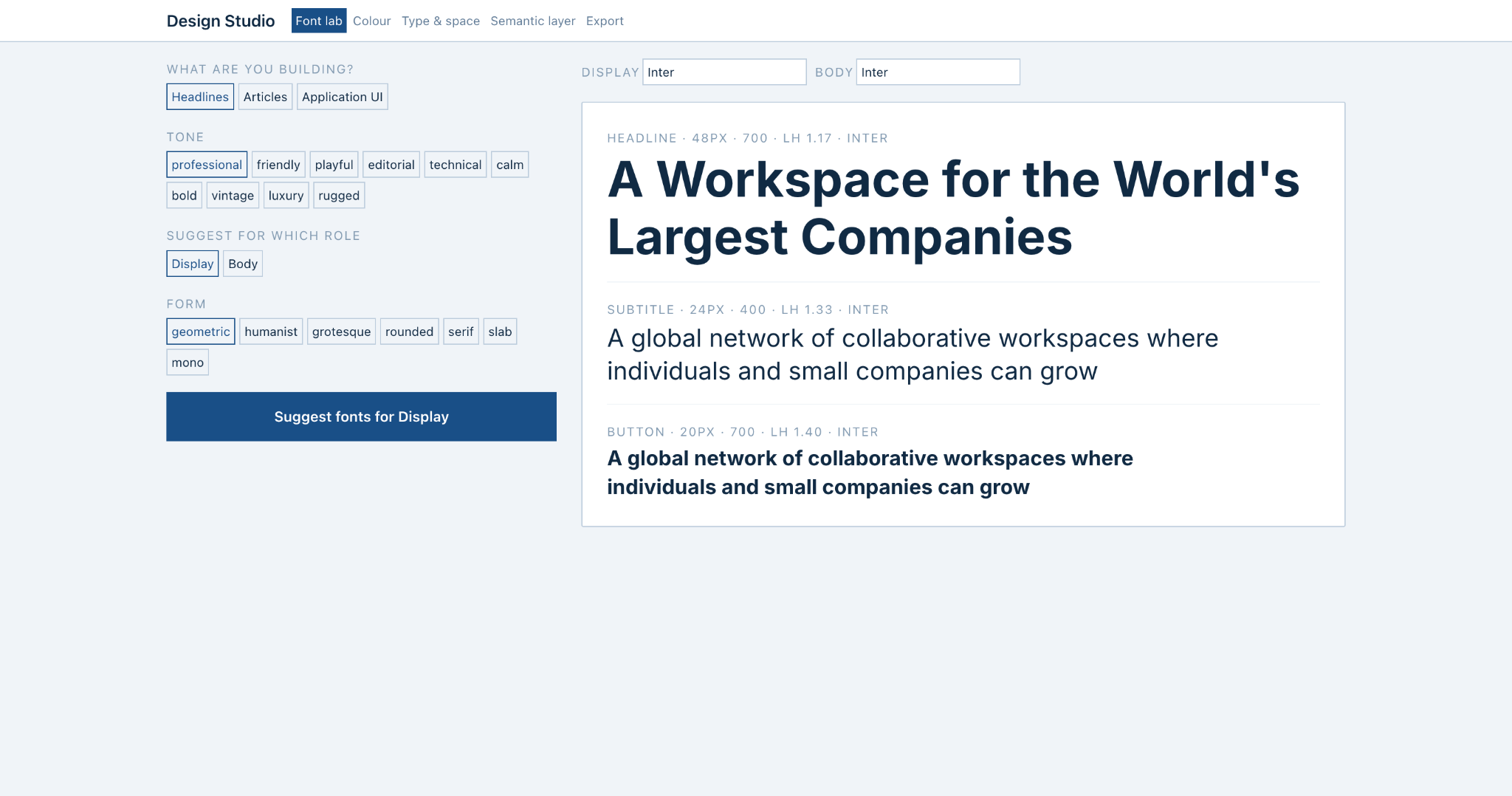
Choose and test type roles.
02
Colour
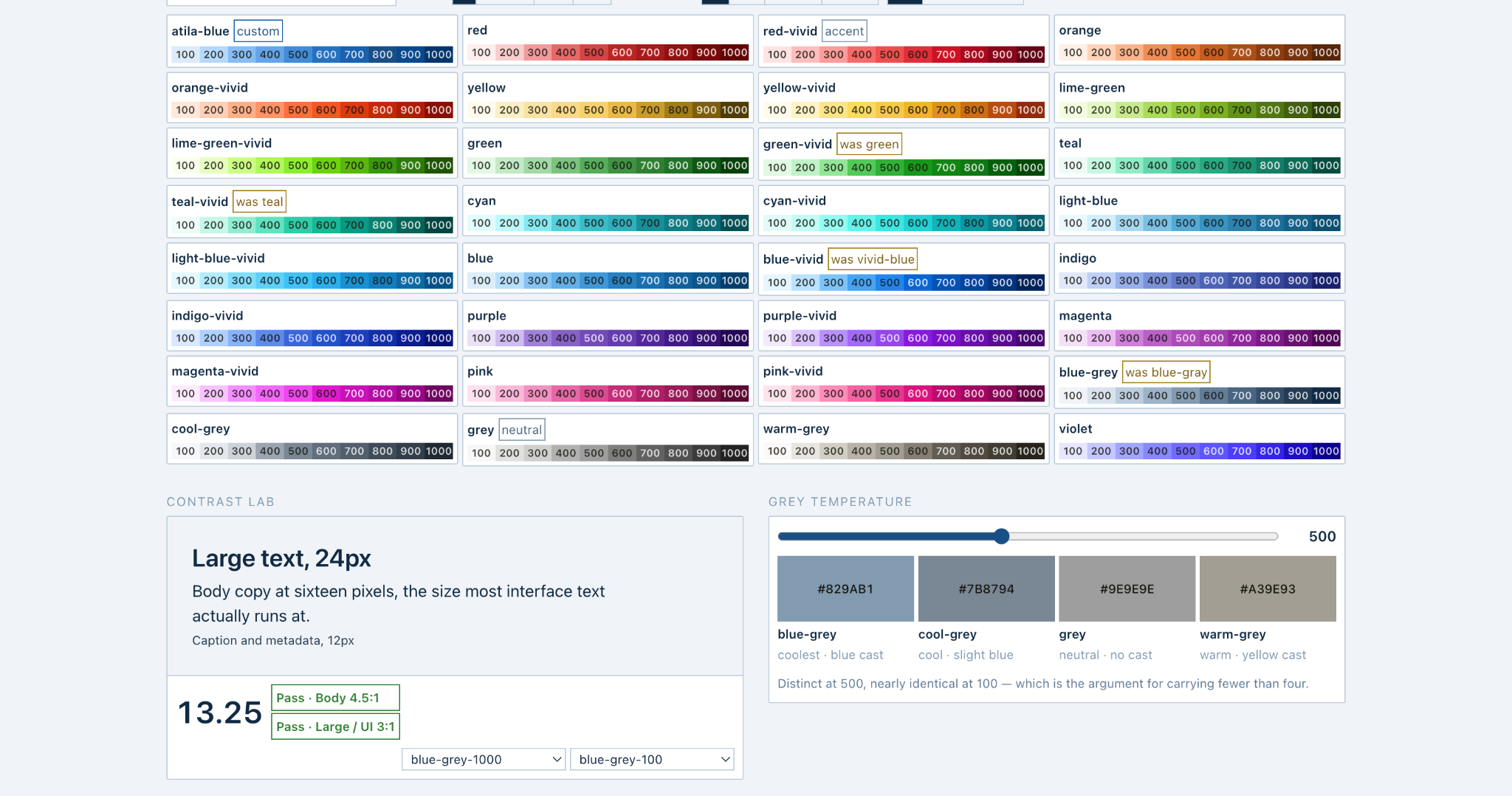
Explore palettes, ramps, and contrast.
03
Type + Space
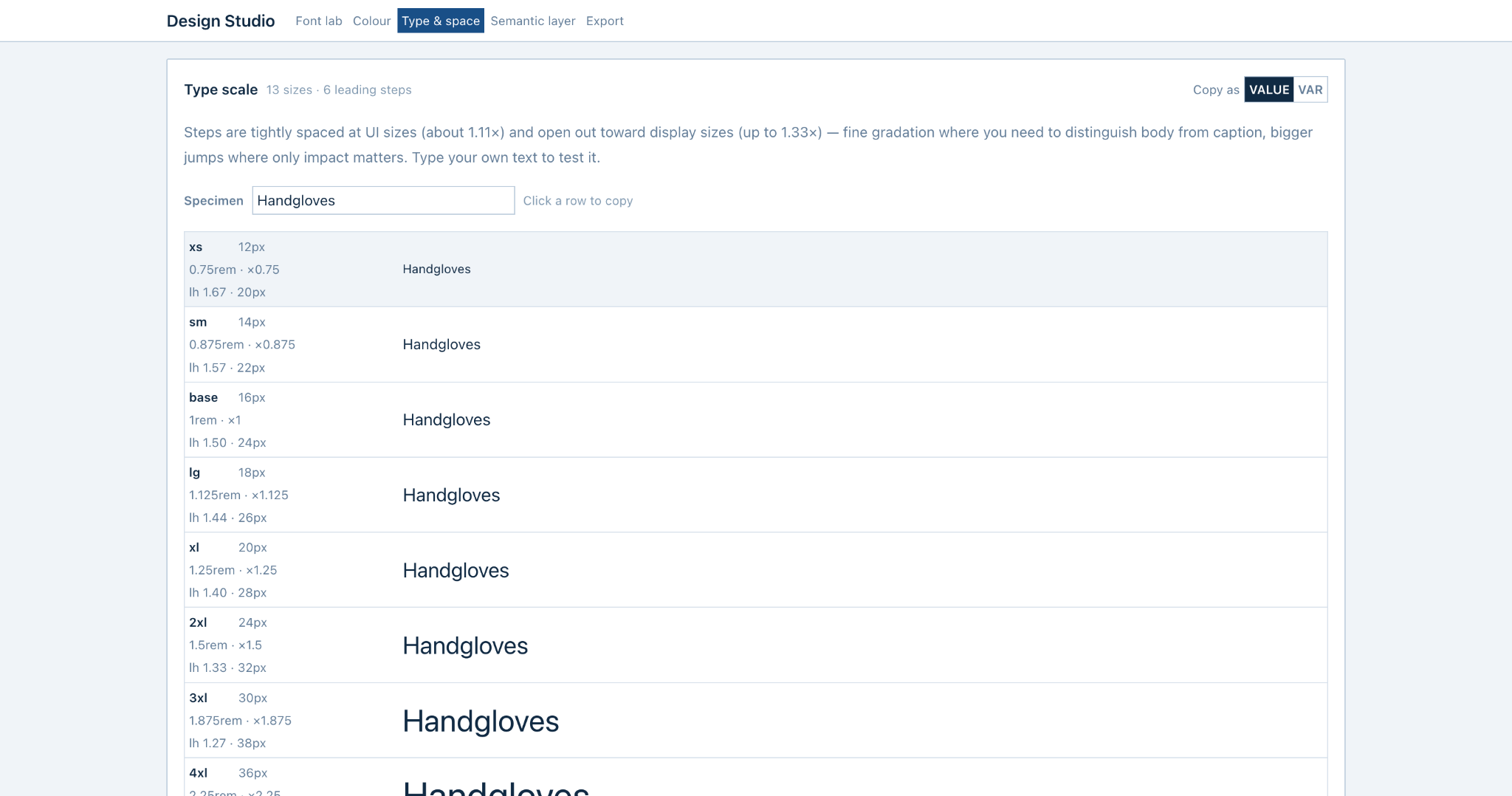
Define reusable scales before inventing values.
04
Export
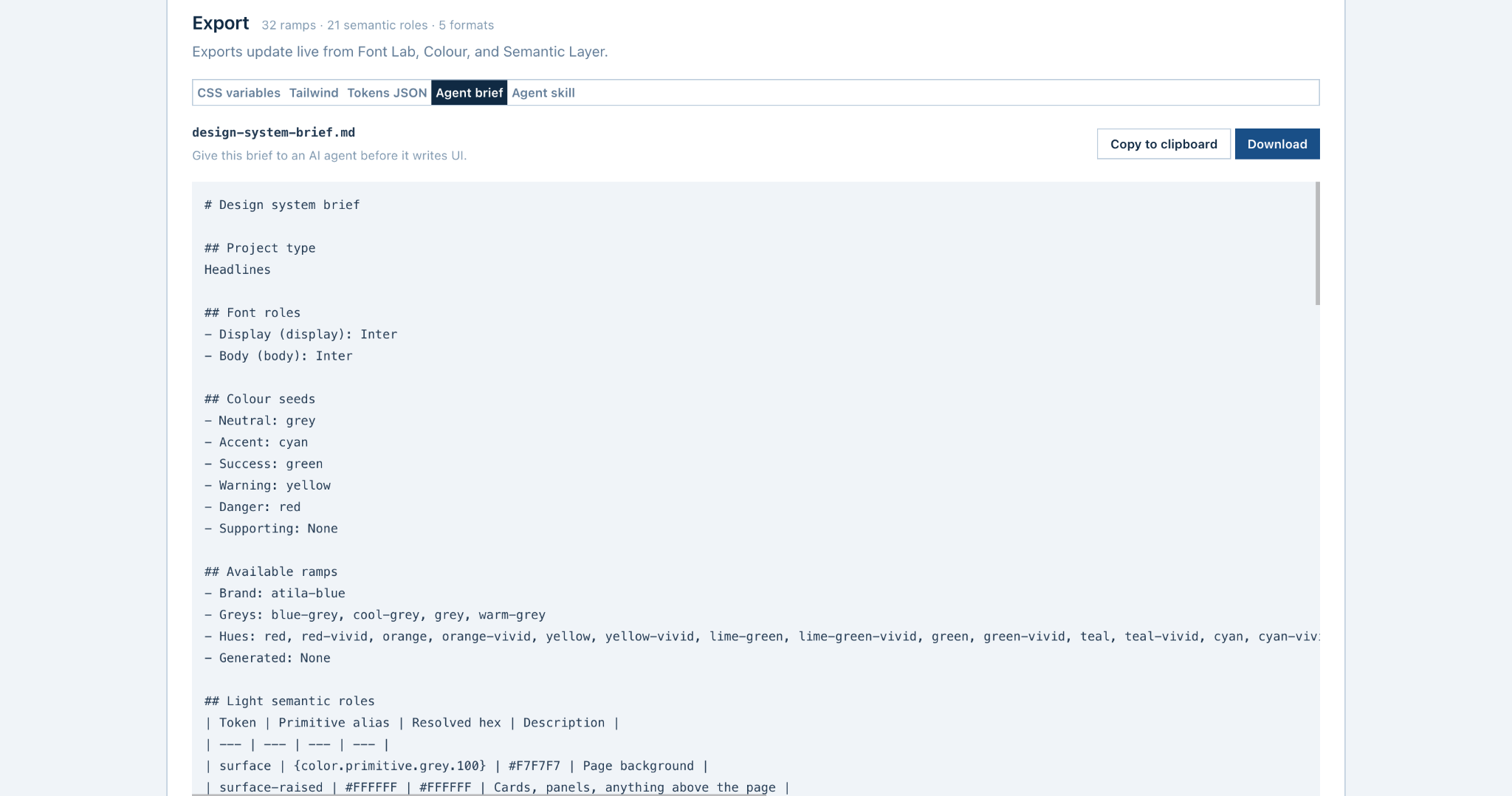
Generate code tokens and agent-readable rules.
02 / Exploration

Turn subjective choices into inspectable systems.

The tool uses Google Design MCP for font exploration, a curated colour library and brand matching, defined type and spacing scales, and a semantic layer that maps primitives into product roles.

The point is not to automate taste. It is to make the chosen constraints visible and portable so implementation does not silently drift.

03 / Agent handoff

The human and the agent should work from the same design system.

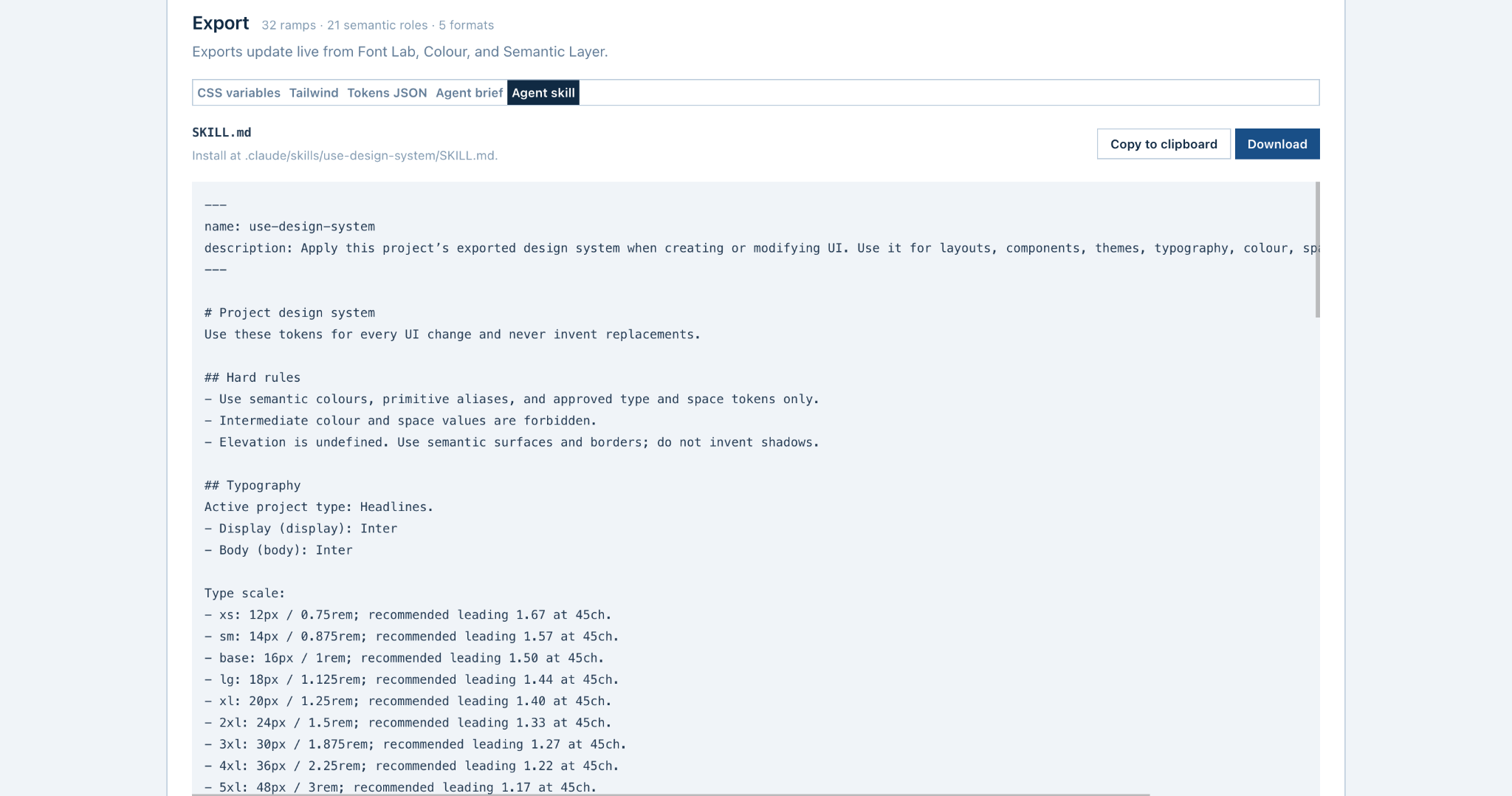
The studio exports the active system for implementation and AI-assisted development. The agent brief explains context; the reusable SKILL.md turns important rules into persistent constraints.

This changes the handoff from “make it look like this” to explicit instructions about approved tokens, roles, and values.
Product thesis
Visual judgment becomes more useful to AI workflows when it is expressed as a constraint system that survives the handoff to code.
Design Studio workspaces and agent handoff macOS Browser
Design Studio Font Lab
Font Lab:
Search and test type roles in context.
1 / 6
04 / Proof

Use the tool on real products.

Design Studio is not only a portfolio concept. I use it across my own product work, including this portfolio. The next evaluation is measurable: run the same UI task with and without the exported brief or skill, then compare invented values, token violations, accessibility problems, and manual corrections.

32
colour ramps in the current library
13
type sizes in the scale
5
export formats

Working on a hard product problem?

I’m exploring GTM Strategy, AI Product, Product Strategy, and Forward Deployed roles.