I helped turn an emerging procedural graph system into a product people could find, navigate, reuse, and adopt without breaking established Maya workflows.
enterpriseProduct foundations
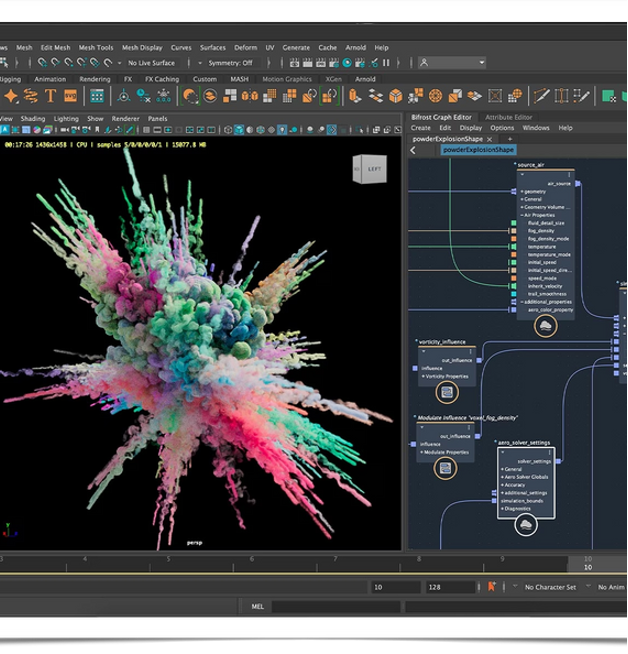
Product contextBifrost combines procedural graphs with Maya's established production environment. The challenge was to make that complexity navigable without reducing expert control.
Role
Senior Experience Designer
Discovery through implementation handoff
Focus
Product foundations
Menu architecture · Presets · Workflow migration
Skills
Product discovery · Information architecture
Workflow design · Research · Prototyping
Tools
Maya · Bifrost · Adobe XD
Open sorting · Competitive analysis · Beta validation
00 / Context
Bifrost was still becoming a product.
When I joined the team, Bifrost still inherited several patterns from Maya's Node Editor. The graph was powerful, but users needed clearer structure around discovery, navigation, reuse, and how the new system fit into production workflows they already trusted.
I worked with production experts, beta users, Product, Engineering, QA, UX Architecture, and Software Architecture. The recurring design problem was translation: turn expert workflow knowledge into product decisions without removing the control expert users needed.
Design principle
Make a complex technical platform easier to understand without pretending the work itself is simple.
01 / Menu
Finding the structure before drawing the interface.
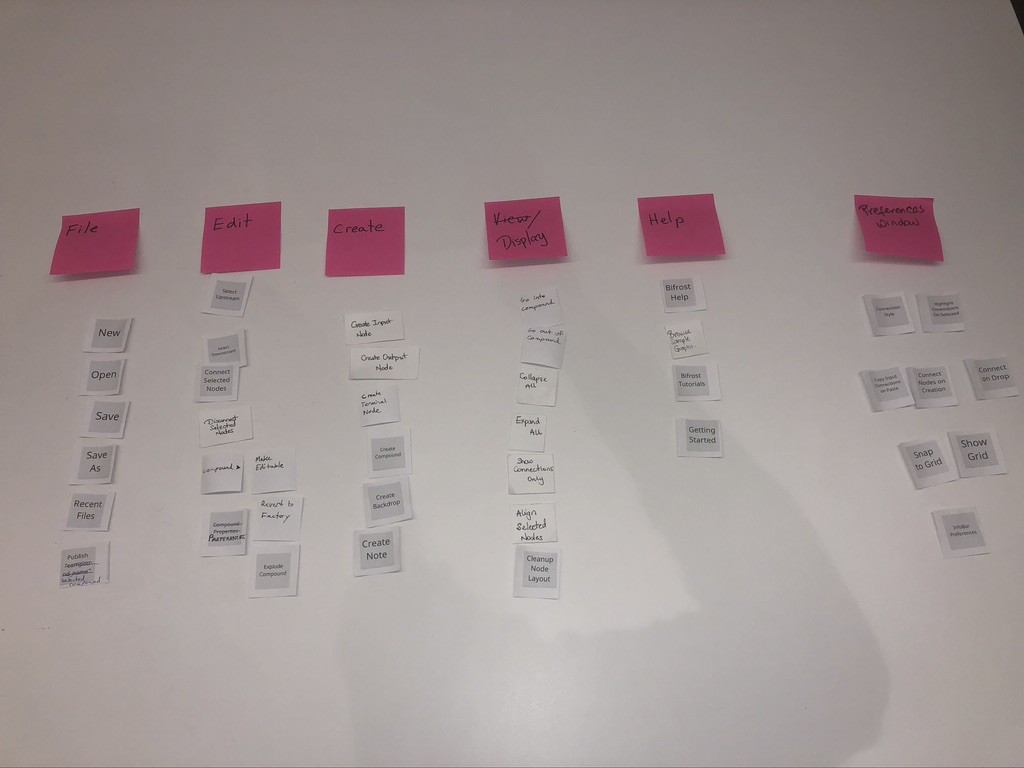
The team needed an information hierarchy for Bifrost. Rather than inherit the Node Editor structure, I started with the people who had production experience and asked how they naturally grouped the work.
What changed
The research became the basis for Bifrost's menu hierarchy, discovery model, and related access patterns inside Maya.
01
Map mental models
Open sorting with five Autodesk subject-matter experts.
02
Compare systems
Reviewed Houdini, Nuke, Unity, Blender, and Maya's Node Editor.
03
Design discovery
Extended the hierarchy into menus, context menus, and entry points.
04
Validate
Used beta feedback and usability work before locking the structure.
Open sort · Autodesk SMEs: Five production experts grouped command cards and named the groups independently. The physical artifact shows the structure being discovered before it was formalized in the product.
02 / Presets
Defining what “reuse” should mean in a procedural graph.
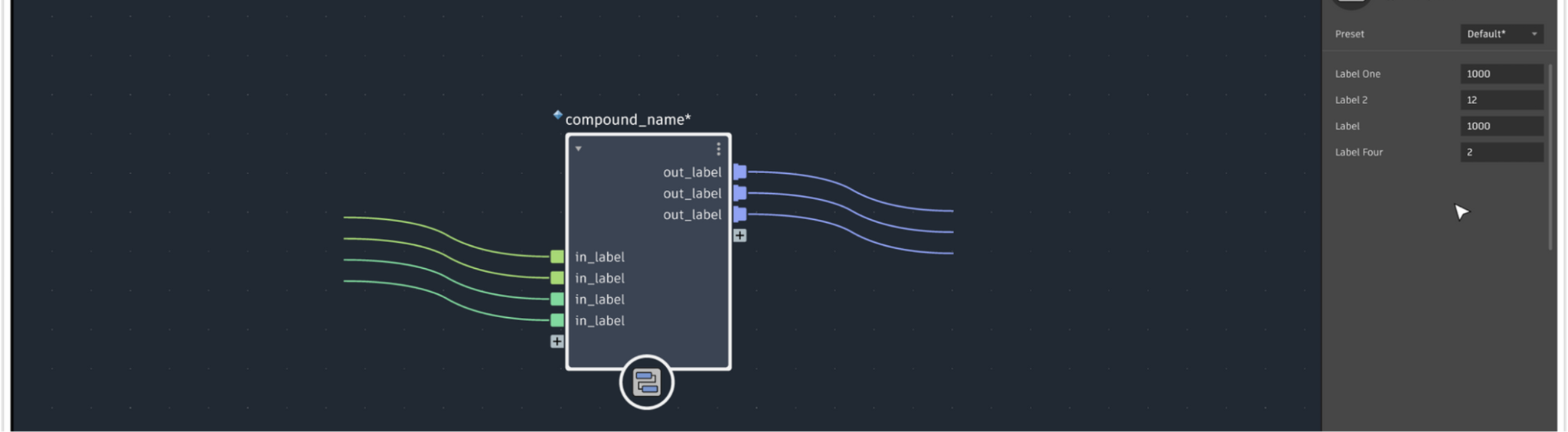
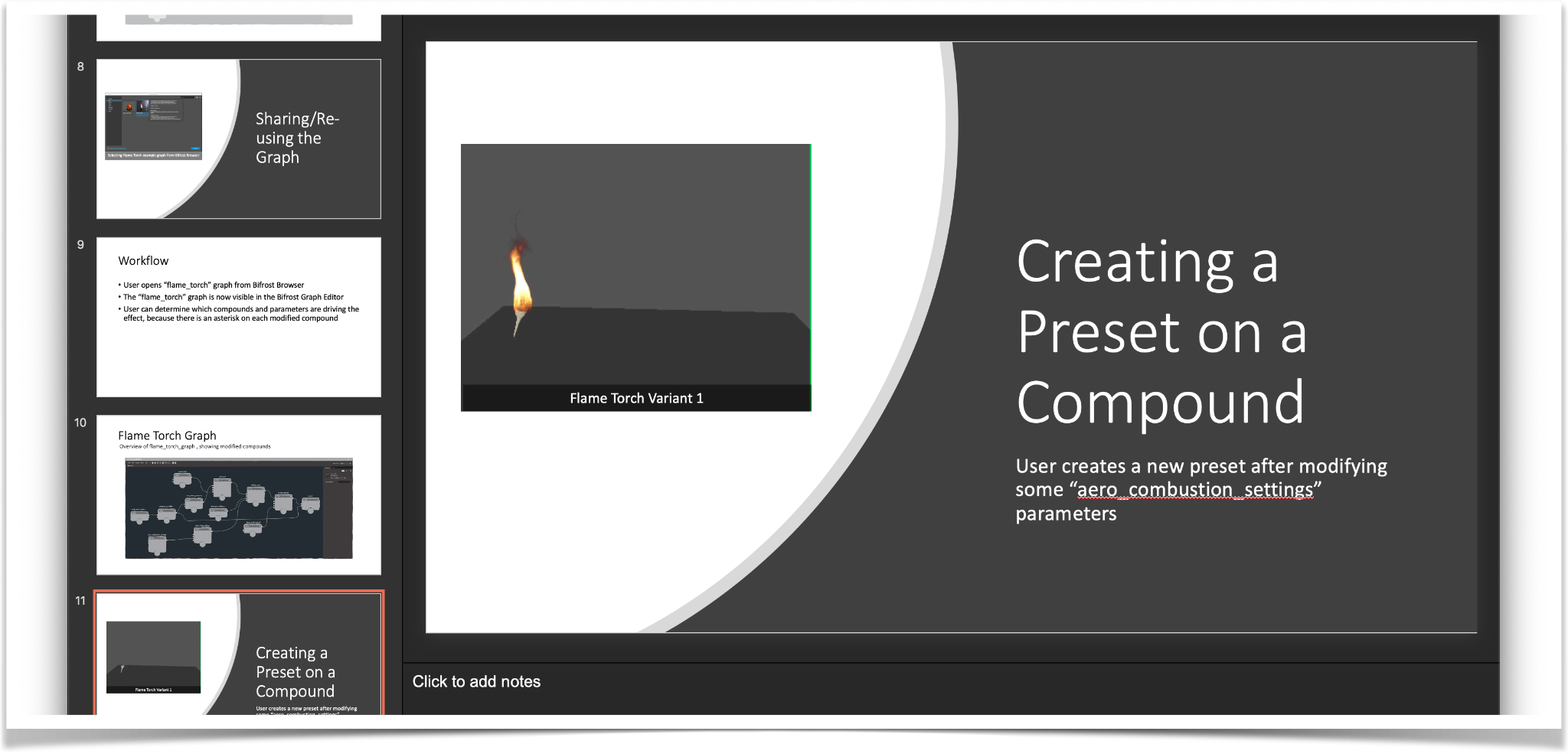
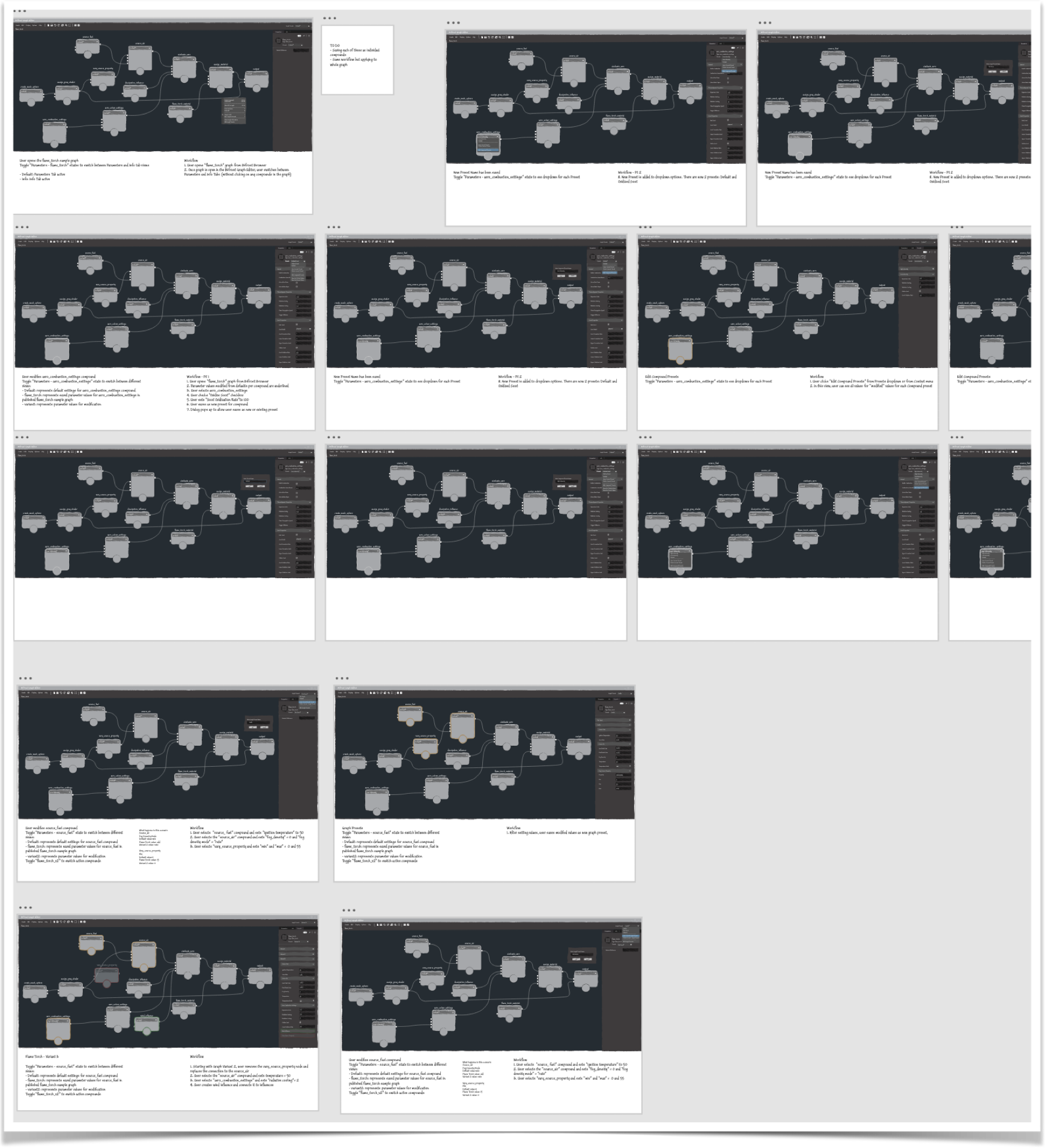
Before designing the Presets interface, I needed to define the model behind it: who creates a preset, who reuses it, what remains editable, and how a saved variation relates to the original graph.
5
beta users in concept validation
Remote
discovery, co-creation, and usability testing
End-to-end
mental model → requirements → prototype → handoff
What changed
The interaction model preserved the relationship between a reusable default and the user's variation, then translated that model into implementation-ready requirements.
Interface study: Reuse had to become easier without hiding procedural control.Workflow model: A working artifact used to reason through how a default compound becomes a named preset.Interaction storyboard: The storyboard connected states and decisions before implementation details were locked.
03 / Migration
Feature overlap did not mean a tool was safe to remove.
A related platform project examined Maya tools whose capabilities overlapped with Bifrost. I recruited two internal experts and asked them to build the same flamethrower effect using established tools and Bifrost.
I mapped both workflows step by step. The question was not only whether Bifrost could make the same result, but whether it could preserve the narrow behaviors and sequencing that studios might already depend on.
Key distinction
“Can Bifrost do this?” and “Can we remove the old tool?” were different product questions.
A
Capability
Can Bifrost technically create the same output?
B
Workflow
Can users complete the same job with comparable control and reliability?
C
Dependency
What behaviors might a studio have embedded into an existing pipeline?
D
Decision
Is the evidence strong enough to deprecate the established tool?
04 / Result
The work established product foundations, not one feature.
These projects happened at different points and solved different problems. Together, they helped define how Bifrost fit into Maya and gave the team stronger evidence for navigation, reuse, and migration decisions.
Menu + discovery
Information architecture grounded in expert mental models, competitive patterns, beta feedback, and usability evidence.
Presets
A defined mental model, validated workflows, prototypes, and implementation requirements for reusable graph work.
Workflow migration
A workflow-based method for assessing substitution risk instead of relying on feature-list equivalence.
Cross-functional translation
Research artifacts became shared decision tools across Product, Engineering, QA, architecture, and customer-facing work.
Working on a hard product problem?
I’m exploring GTM Strategy, AI Product, Product Strategy, and Forward Deployed roles.